HomePlagiarism Checker for Students
For Students · Private · No signup · No card

Plagiarism Checker for Teacher — and Check Before You Submit

A free plagiarism checker built for students — plus a plain-English guide to what plagiarism really means, how to read a similarity score, and the writing habits that make the whole problem go away. Paste your draft, get a private report in 30 seconds, and submit work you are genuinely proud of. No signup needed to start.

Private scan
0 / 1,000 words
Free, no signup·Plagiarism + AI in one report·Works on any device
plagiarismcheckerplus.com/check/essay-draft-3
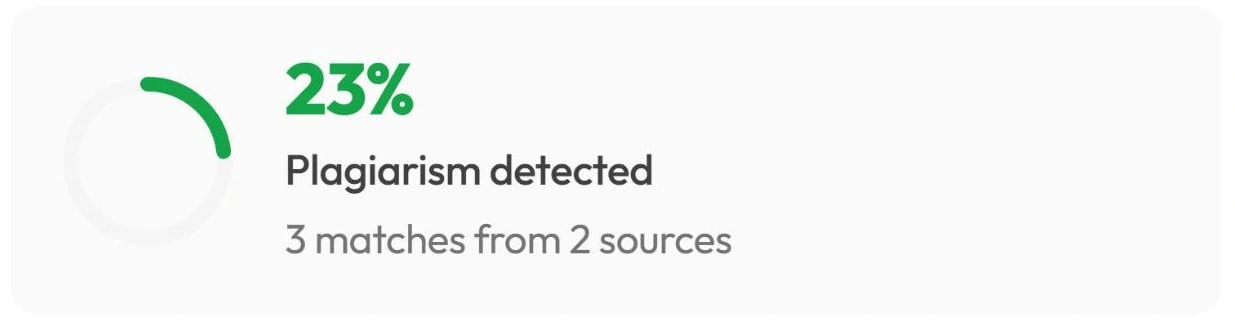
76SCORE
Originality
3 sources matched
24% similarity12% AI1,247 words
The Industrial Revolution fundamentally transformed European society between 1760 and 1840, ushering in unprecedented economic growth. Workers migrated en masse from rural villages to urban centers, while new manufacturing technologies reshaped daily labour across the continent.
1 passage needs a citation · britannica.com (11%)
Your report, in 30 seconds

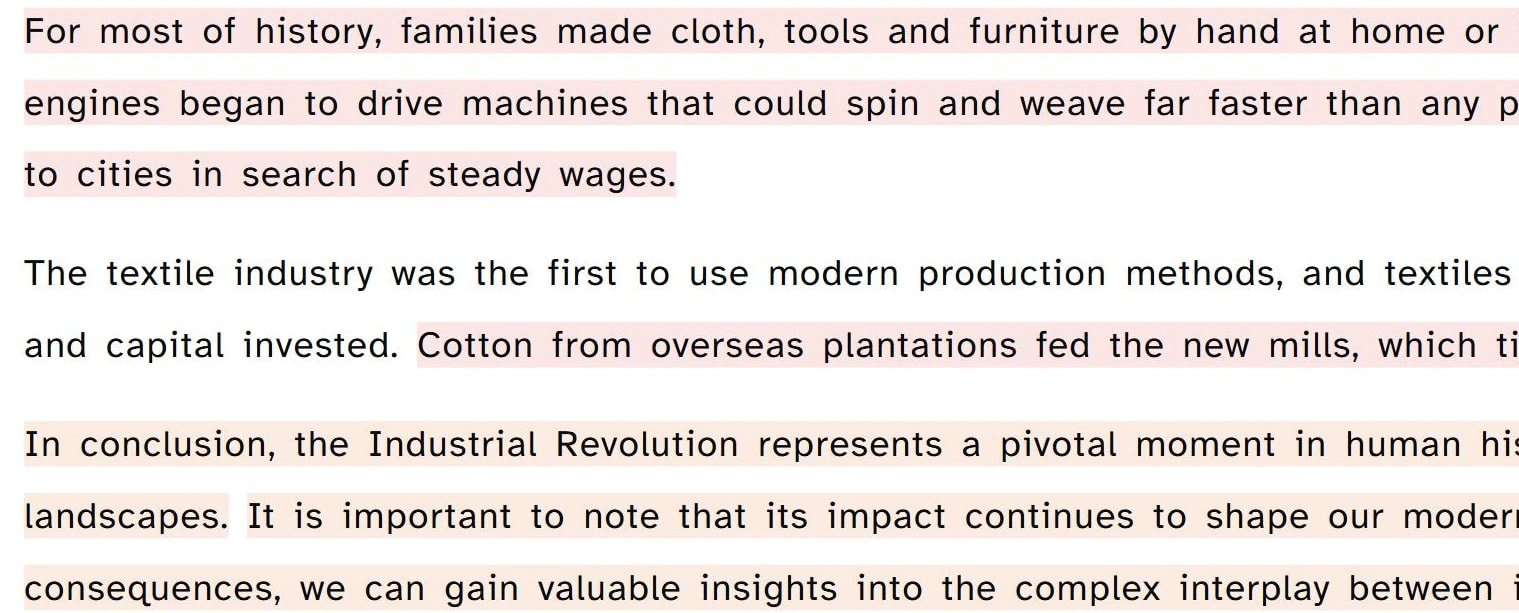
See exactly what to fix — sentence by sentence

Every flagged passage is highlighted and linked to the source it matched, with a plagiarism and AI score in the same report. No guessing, no panic.

24%
Similarity
12%
AI signal
3
Sources matched
1,247
Words scanned

Most students who get flagged for plagiarism did not set out to cheat.

That is not a defence of academic dishonesty — it is just the reality. The majority of plagiarism cases at the undergraduate level involve citation mistakes, rushed paraphrasing, poor note-taking habits, or a genuine misunderstanding of what the rules actually require. Intent rarely matters once the submission is in.

This page is for students who want to understand plagiarism properly, know how to check their own work with a free plagiarism checker before it is too late, and build the kind of writing habits that make the whole problem go away in the long run.

The fundamentals

What plagiarism actually means — and why it is more complicated than you think

The dictionary definition — presenting someone else's work as your own — sounds clear enough. In practice, the edges are blurry, and a lot of students get caught by forms of plagiarism they did not know existed. Here are the five forms your university is actually looking for — and how to spot each one in your own draft.

01

Direct Plagiarism

Copying text from a source and pasting it into your essay without quotation marks or attribution. Even a single sentence counts. Even a famous phrase. It is the easiest form to avoid — but it still happens under deadline pressure.

Spot itA sentence you could find word-for-word with a quick Google search.
02

Paraphrasing Plagiarism

Swapping synonyms into someone else's sentence structure is not paraphrasing — it is a structural copy. A real paraphrase reconstructs the idea from scratch in your own voice, and cites the source regardless. This is where most students get caught without realising it.

Spot itYour sentence follows the source clause-for-clause, just with synonyms swapped in.
03

Mosaic Plagiarism

Stitching together phrases from different sources, mixed with your own sentences, without attribution. The result looks original at a glance but is actually a patchwork of borrowed language — common in research papers read quickly under pressure.

Spot itPolished phrases that sound sharper than your own writing, scattered through a paragraph.
04

Self-Plagiarism

Submitting your own previously submitted work for a new assignment without disclosure — resubmitting an essay, copying large sections, or reusing published work. An assignment is meant to show new learning; recycling defeats that purpose, even if the work was yours.

Spot itReusing paragraphs from a paper you already handed in, without telling anyone.
05

Accidental Plagiarism

A forgotten citation, a misremembered idea, a lost URL, a quote copied into a draft without its reference. It happens to careful writers. The difference between a violation and an honest mistake is often whether you caught it before submission.

Spot itA claim or statistic with no citation, because you lost track of where it came from.

Paraphrasing, side by side

Original source

“Climate change represents one of the most complex governance challenges of the twenty-first century.”

Poor paraphrase

“Global warming is among the most difficult governing problems of the 2000s.”

Same structure, swapped vocabulary. A checker and an experienced professor will both catch this.

Real paraphrase

“Few problems are as hard for governments to coordinate around as a warming planet, where action requires agreement across nations that rarely act in unison (Author, 2021).”

Rebuilt from the idea in your own voice — and cited anyway, because the idea still came from a source.

On self-plagiarism: if you want to build on something you previously wrote, the honest approach is to tell your instructor and ask whether that is acceptable. Many will say yes with proper disclosure. None of them will say yes after discovering it without being told.

Reading the report

What a similarity score actually tells you (and what it doesn’t)

When you run your essay through a plagiarism checker, you get a similarity percentage. A lot of students either panic at any number above zero or relax too quickly at anything below 15%. Neither response is quite right. The percentage is the proportion of your text that matches language found in other sources — it does not, by itself, tell you whether plagiarism occurred.

your essay · 24%
0–15%Usually fine
15–30%Review it
30%+Needs work

Thresholds vary by institution — these are rough guides, not rules. A well-cited paper with quotations can sit higher and still be fine.

High score, still legitimate
  • Properly quoted and attributed material
  • Standard technical terminology shared across sources
  • A references or bibliography section that matches other documents
  • A title, your name, and your institution appearing in other submitted papers
Low score, still plagiarised
  • Close paraphrasing that does not match word-for-word
  • A source that simply is not in the checker's database

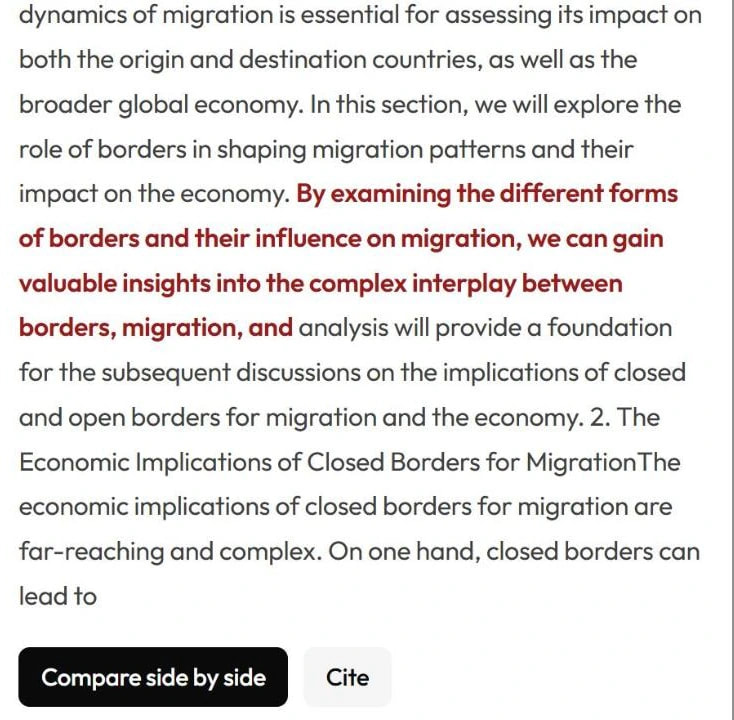
The number is a starting point for review, not a verdict. What matters is the sentence-level detail — which specific passages are flagged, what source they match, and whether those passages are properly attributed. This is why sentence-level highlighting matters more than the overall score: when you can see exactly which sentence triggered a flag and compare it side-by-side with the matched source, you can make a real decision about what needs to change.

Using the tool well

How to use a plagiarism checker the right way

Running a plagiarism check five minutes before a deadline is better than nothing, but it is not the most useful way to use the tool. Here is how to actually benefit from it.

Check early, not just at the end

Run a check on your first complete draft — not your final one. Finding a flagged section the night before submission and having to rewrite it is stressful. Finding it a week out is just good editing.

Look at the highlighted sentences, not just the score

Open the detailed report and read each flagged sentence. For every flag, ask yourself three questions:

  1. 1Is this a direct quote that I've properly marked as a quote?
  2. 2Is this a paraphrase of someone else's idea that I've cited?
  3. 3Is this my own original language — and if so, why is it matching something?

The answers tell you what to do. A properly quoted and cited sentence that appears flagged is not a problem. An unflagged sentence you know came directly from a source is a problem the checker missed — fix it anyway.

Use the checker to learn, not just to pass

If the same types of sentences keep getting flagged across multiple documents — transitions, opening statements, factual claims — that is useful information about your writing habits. Over time, you develop a clearer sense of which parts of your writing are genuinely yours and which are absorbed from reading.

Habits that work

How to actually avoid plagiarism (practical habits that work)

The real solution to plagiarism is developing writing habits that make it structurally unlikely — not just checking carefully at the end.

Take research notes in two columns

One column for exact quotes (copied word for word, source recorded immediately); one for your own reflections and paraphrases. The separation gives you a clean record of what is theirs and what is yours before a single sentence goes into the draft.

Paraphrase after you close the source

Close the tab. Write what you remember in your own words. Then go back and check your version is accurate. You reconstruct from memory rather than rewording what is in front of you, which almost eliminates close paraphrasing.

Cite when in doubt — every time

There is no penalty for an unnecessary citation and a real penalty for a missing one. Over-citation is a stylistic issue. Under-citation is an integrity issue.

Keep your source list as you go

Add each source to your reference list the moment you use it. This prevents finishing a draft and then discovering you cannot remember where a quote came from.

Build in a day between finishing and submitting

Coming back with fresh eyes before a final check is the most reliable way to catch problems you missed while writing. It is much easier to spot language that sounds unlike your own voice with some distance.

Responding to flags

What to do when your checker flags something

Getting a flag is not a crisis — it is information. Here is how to respond to the most common situations.

A direct quote that is already cited
Check it has quotation marks and an in-text citation. If it does, the flag is harmless. If the quotation marks are missing, add them.
A paraphrase that is already cited
The paraphrase is probably too close to the original. Rewrite it more substantially in your own words and keep the citation.
A paraphrase with no citation
Add a citation immediately. This is the most common fixable issue.
A standard phrase or technical term
Often a false positive — common phrasing, subject terminology, or your institution's name in a header. Exclude it or note it as a non-issue.
Genuinely copied with no citation
Rewrite it properly as a cited paraphrase, or quote it directly with quotation marks and a citation. Do not just delete it — the source still needs acknowledging.
Citation

A note on citing sources properly

One of the most consistent underlying causes of plagiarism among students is not bad intent — it is not knowing how to cite correctly. Different subjects use different styles, and even within one style the rules for books, journal articles, websites, and secondary sources all differ slightly.

APAAmerican Psychological Association

Psychology, education, social sciences. Author-date in-text: (Smith, 2021).

MLAModern Language Association

Humanities and literature. Author-page in-text: (Smith 47).

ChicagoChicago / Turabian

History, arts, some sciences. Two variants: notes-bibliography (footnotes) and author-date.

HarvardHarvard referencing

Similar to APA with formatting differences. Common in UK and Australian universities.

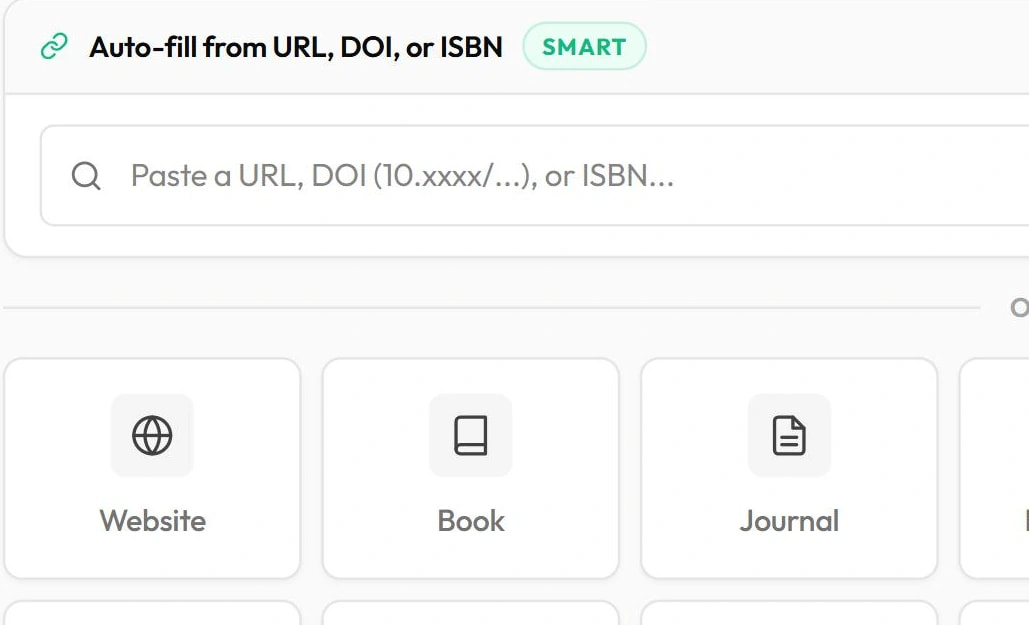
Getting the style wrong is a formatting issue, not a plagiarism issue — but getting the attribution wrong (citing the wrong source, misquoting, or leaving a source out) is an academic integrity issue. If you are not sure your citations are accurate, our citation generator builds the formatted reference for you from a URL, DOI, book title, or ISBN, which removes the formatting guesswork entirely.

A closer look

Self-plagiarism in university: a closer look

The policy varies significantly between institutions and even between departments, and a lot of students are genuinely caught off guard. The core question is: what is the purpose of the assignment? If an essay is meant to demonstrate that you engaged with new material and practiced new skills, then submitting work you did previously — even your own — does not fulfil that purpose. You are representing old work as new work.

Some institutions allow reuse with disclosure and explicit permission. Most do not allow it without. If you want to build on previous work:

  1. 1Tell your instructor before you submit, not after
  2. 2Ask explicitly whether it is permissible and in what form
  3. 3If it is allowed, cite your own previous work as a source in the new document

Most instructors are reasonable about this when approached honestly. What they are not reasonable about is finding out retroactively.

Understanding the spectrum

Plagiarism vs. poor academic practice: understanding the spectrum

Not every academic integrity issue is the same. The appropriate response and the institutional consequence are different for each — which is why the distinctions matter.

Integrity issue
Serious offence

Plagiarism

Presenting someone else's ideas, language, or work as your own, whether intentionally or not.

Collusion

Submitting work completed with another student as if it were your own individual work — sharing answers, co-writing without disclosure, or letting another student copy your work.

Contract cheating

Paying someone (or using a service) to write your assignment. Treated as a serious offence at virtually every institution.

Ghost-writing

Having an AI or another person write the assignment on your behalf. With the rise of AI writing tools, most universities have updated their policies to address it explicitly.

If you are unsure which category applies to a situation you are in, your institution's academic integrity office will give you a straight answer — and most of the time, asking early is treated more favourably than being caught later.

FAQ

Frequently asked questions from students

There is no universal answer because it depends on your institution, your subject, and the nature of the work. Some universities set a guideline of under 15%, others under 20%, others have no fixed threshold and look at the report qualitatively. A properly quoted and cited dissertation might have a higher similarity score than an essay with no quotations, and that is fine. Ask your instructor or check your institution’s academic integrity policy for the specific threshold they use.
The bigger picture

Why this matters beyond your grade

Academic integrity policies can feel bureaucratic from the inside — rules to follow, boxes to tick, percentages to stay under. But the skills those rules protect — reading critically, synthesising ideas, forming original arguments, attributing sources accurately — are the same skills that make writing professionally useful.

University is where these habits are built. The student who learns to paraphrase properly, cite accurately, and develop a genuine voice is not just avoiding an academic penalty — they are building a skill set that transfers directly into every professional writing context they will encounter afterward. The plagiarism checker is the last line of defence before submission. The real work is everything that happens before that.

More tools

More tools to help you write better

Check your essay for plagiarism — free, no account needed

Paste your draft, get a private report in 30 seconds, and submit with confidence.

After your plagiarism check, you might also find our Citation Generator useful — it builds properly formatted APA, MLA, Chicago, or Harvard references from a URL, DOI, or book title in seconds.