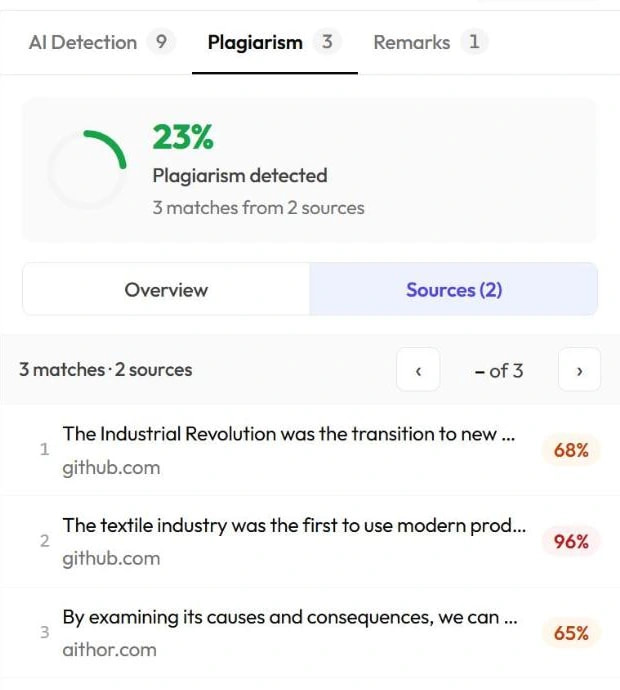
Scan a whole class in one batch
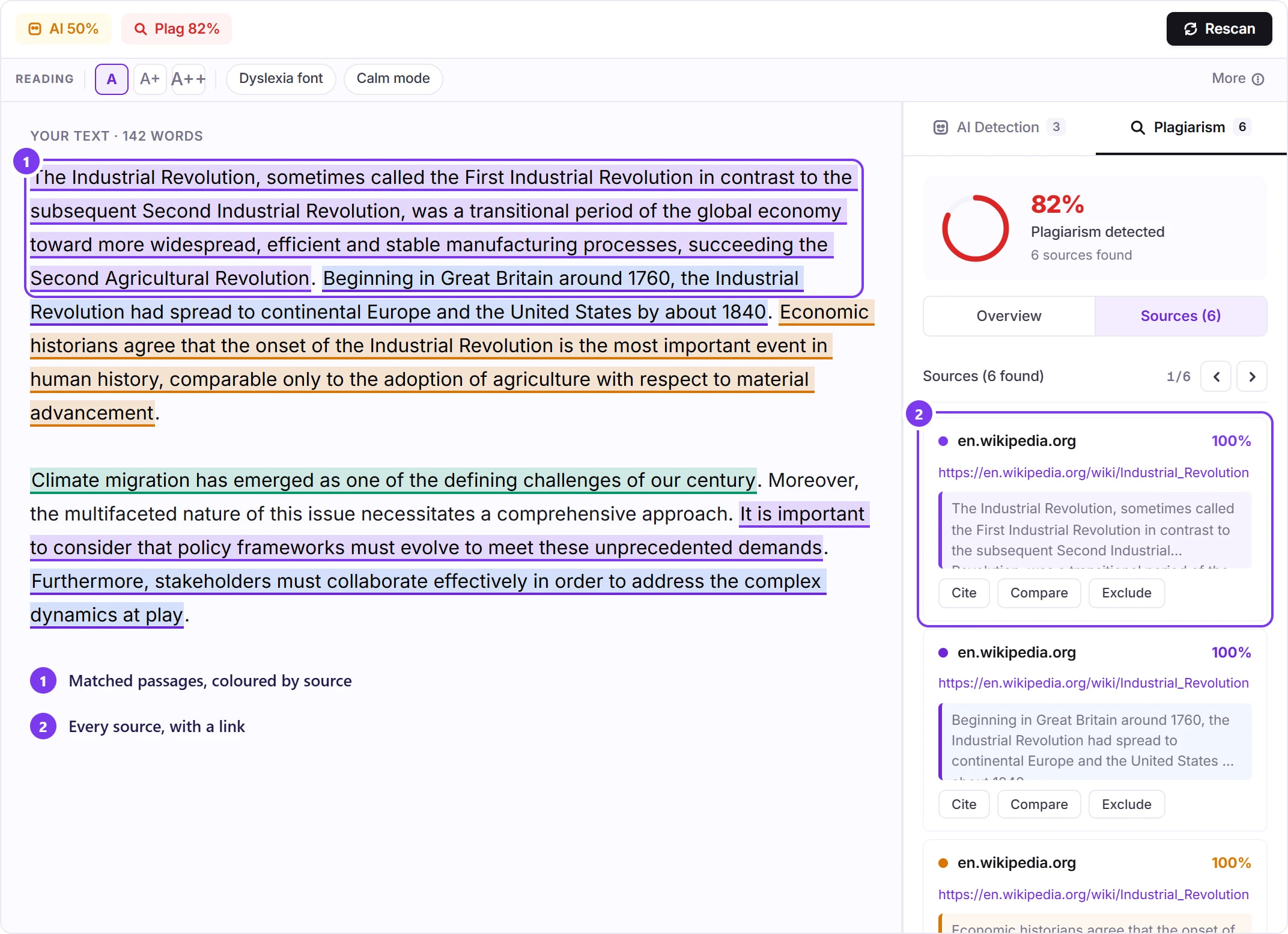
Upload an entire submission set, get an individual sentence-level report for each student, and see at a glance which papers actually need a closer look. No checking 30 papers one at a time.
For teachers, plagiarism detection is more layered than it is for students.
When a student runs a check, the goal is simple: find anything to fix before submission. You are doing something harder — making a judgment about a student's work that carries real consequences for their grade, their progression, a scholarship, or their confidence.
That means using a detection tool well is not purely technical. It involves understanding what the tool is actually measuring, what it can and cannot tell you, and how to respond in a way that is both consistent and fair. The tool — our free plagiarism checker — is part of the answer, but how you communicate expectations and respond to what you find matters just as much. That is what this page focuses on.
What plagiarism checkers actually measure
This shapes how you interpret every report you receive. A checker measures textual similarity — and that is all it measures. Understanding the line between what it can and cannot tell you is the difference between using it fairly and misusing it.
A high similarity score is a prompt for closer inspection, not a verdict. A low score is not a guarantee of originality — a student who paraphrases carefully, or sources from material outside the database, can produce a clean report on a paper that still has attribution problems. The most reliable approach is to read the sentence-level report rather than the headline percentage, and pair it with your own reading of the work.
The types of plagiarism you are most likely to encounter
Not all plagiarism looks the same, and recognising the different forms helps you respond appropriately — and proportionately.
How to interpret a plagiarism report fairly
Reading a report carefully before drawing conclusions is one of the most important things you can do to make sure your response is appropriate.
Building a plagiarism check into your assessment workflow
The practical question is not whether to check for plagiarism but how to do it efficiently with a full marking load. Four habits make it sustainable.
How to have the conversation with a student
Finding plagiarism is not the end of the process. How you handle the conversation that follows often determines whether the outcome is productive or damaging.
Start with questions, not conclusions
Treat the first conversation as information-gathering. Ask the student to walk you through their research process and where a passage came from. Students who plagiarised deliberately struggle to answer questions any honest writer could answer easily — and you avoid having to walk back a conclusion you stated too firmly.
Be specific about what you found
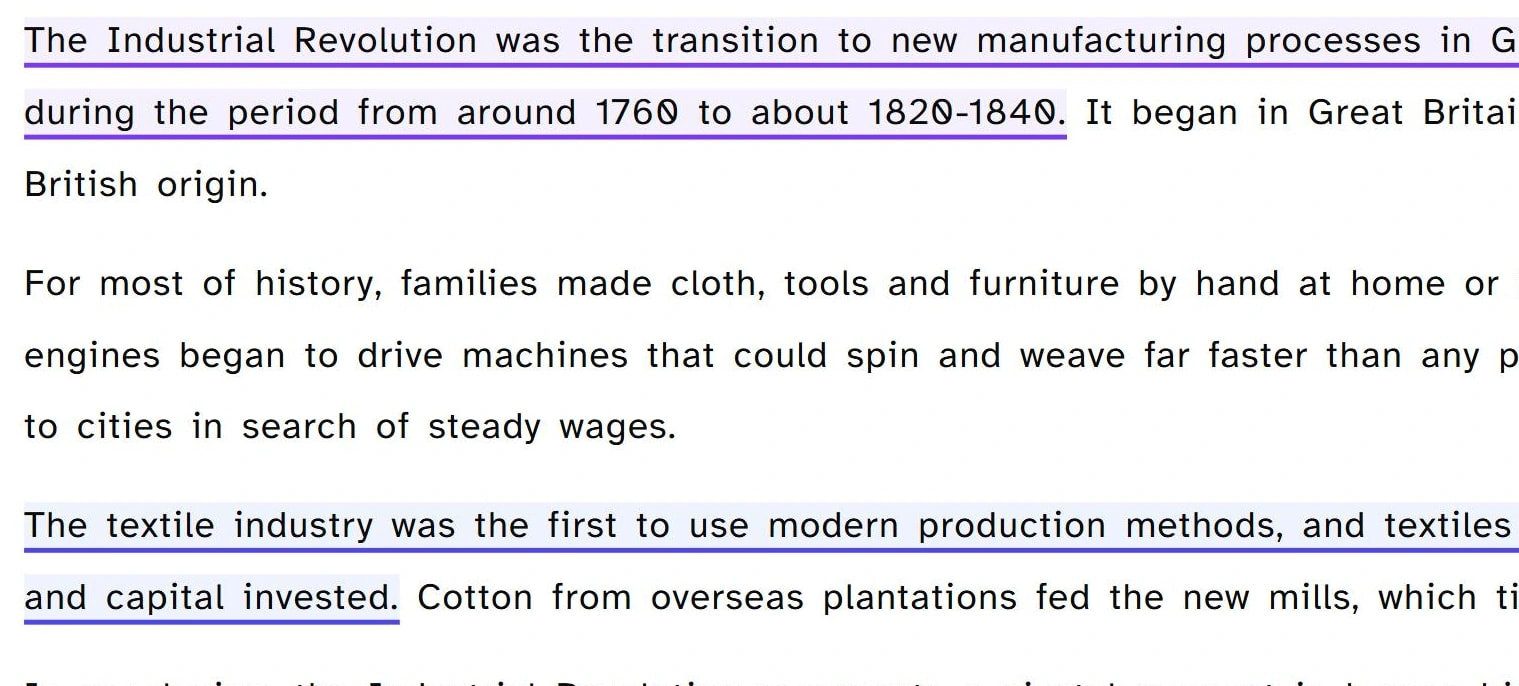
Showing the specific sentences, matched sources, and nature of the issue is far more useful than “your paper has a plagiarism problem.” The sentence-level report is exactly the right tool — open it together and walk through the flagged sections.
Distinguish learning from integrity
Some flags mean a student has not yet learned to write academically — a teaching problem that needs instruction, not just penalty. Others — work written by someone else, deliberate copying — are integrity violations. Making that distinction transparently maintains trust while holding a real standard.
Follow your institution’s process
Whatever your judgment, document your findings and follow your institution’s reporting guidelines. Do not handle serious cases informally — it creates inconsistency, leaves you professionally exposed, and deprives the student of a fair process. The ICAI fundamental values are a useful anchor.
Communicating expectations before submissions are due
A significant proportion of plagiarism cases could be prevented by clearer upfront communication. Students often do not know what is expected because no one has told them.
Put your policy in the assignment brief
Do not assume students have read the institution’s policy. Include a short paragraph in every brief covering whether collaboration is allowed, whether AI tools are permitted and how, the required citation style, and how similarity will be handled. Most misunderstanding-driven cases disappear.
Explain what plagiarism looks like in your subject
Integrity looks different across disciplines: reusing standard methodology language is expected in a lab report but not in a literature essay; quoting legislation verbatim is standard in law. Students from other subject backgrounds do not always know your norms — make them explicit, ideally with examples.
Teach citation before you require it
For first-years or students new to academic writing, class time on building a reference list and formatting in-text citations is not wasted — point them to Purdue OWL’s citation resources. It produces better work and fewer issues, and gives you a clear reference point if an integrity issue arises later.
Using detection across different assignment types
Not every assignment carries the same plagiarism risk — and your checking can be calibrated accordingly.
Research papers & essays
The highest-risk type — extensive source engagement, higher scores, more complex reports. Read flagged sections carefully and weigh the proportion of quoted or closely paraphrased material against sections where the student writes analytically in their own voice.
Group projects
You often cannot tell from the report which student wrote a flagged passage. The conversation needs to include who wrote which sections. Requiring individual contribution statements makes students accountable for specific sections — and shifts the incentive in the right direction.
Literature reviews & annotated bibliographies
Extensive source engagement means naturally higher similarity than a reflective essay. Adjust your expectations before interpreting the report, and focus your review on sections where the student should be synthesising or analysing rather than summarising.
Short response & reflection tasks
Lower risk — less room to hide borrowed content, and students usually write from personal experience. A full check on every short response is not the best use of your time; save detailed review for the higher-stakes submissions.
Frequently asked questions from teachers
Academic integrity as a teaching value
Detection tools are useful — they catch what would otherwise be missed, save time, and provide documentation when it matters. But the goal of academic integrity is not a zero plagiarism rate. It is students who understand what honest intellectual work looks like and why it matters.
That goal is only partly achieved through detection. The larger part comes from clear expectations, genuine feedback on writing, assignment design that makes originality meaningful, and a classroom culture where the work feels worth doing honestly. The teachers who see the best outcomes are not the ones with the strictest enforcement — they are the ones who treat detection as one tool in a broader practice, always in service of helping students become better writers and thinkers. That is the context in which we built this.
More from Plagiarism Checker Plus
Try the plagiarism checker — no account required
Check a single paper free in 30 seconds. Need to check student work in bulk? Folders and bulk upload are available on educator plans.
Submitted documents are processed during the scan and never added to a shared comparison database — which addresses one of the most common student privacy concerns.